How a Pin Tumbler Lock Works
Lock picking first you should know how a lock works or more importantly how a lock tumbler works . Sparrows Lock Picks Canada have a great range of practice lock picking tumblers and also step by step books on how to pick locks all at www.locksmithstoolbox.com
The basic design of the pin tumbler lock has been in use since 4000 BC. Of course, it’s gotten more complex over the millennia. The design that is used in most cylinder locks – like the one on your front door — has been around since 1861 and it hasn’t changed much. Basically most of the world is using a technology that’s been around for a century and a half to keep their most prized possessions safe and secure.
Here’s the anatomy of most run-of-the-mill pin tumbler locks:
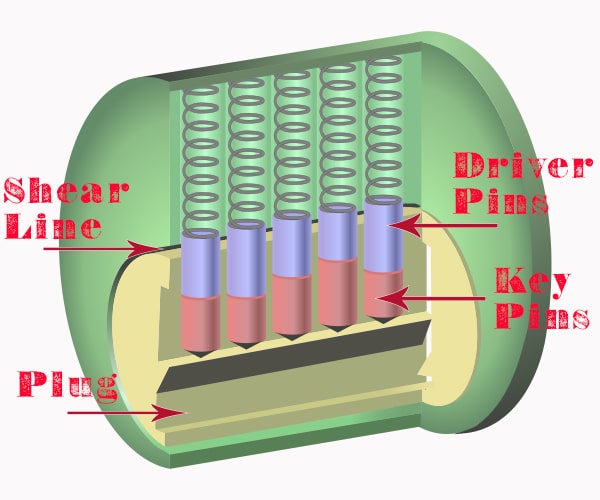
Pin tumbler locks consist of an outer cylindrical casing (colored green) in which a plug is housed. The small gap between the outer casing and the plug is called the shear line. Remember that. It will come in handy here in a bit. The plug has an opening for the key. When the proper key is inserted into the plug, the plug can rotate, thus unlocking the lock. On top of the plug, a series of five or six holes are drilled. The holes contain key pins (colored red) of different lengths. They’re called key pins because they touch the key when you insert a key into the plug. Above each key pin is a driver pin that’s spring-loaded.
So you have an idea of how the pins look in action, here’s a gif of me inserting a pick into a see-through practice lock:


Comments
Post a Comment